
Add Row
Add Element
UPDATE
Add Element
  • Home
  • Categories
    • Technology & Innovation
    • A.I. Explained
  • A.I. Tools & Breakthroughs
  • Robotics & Automation
  • AI in Business & Marketing
  • AI Ethics & Society
  • AI Video & Media Creation
  • Financial Tech & Funding
August 28.2025
3 Minutes Read

Discover Google’s NanoBanana: A Game-Changer for Detroit Tech Startups

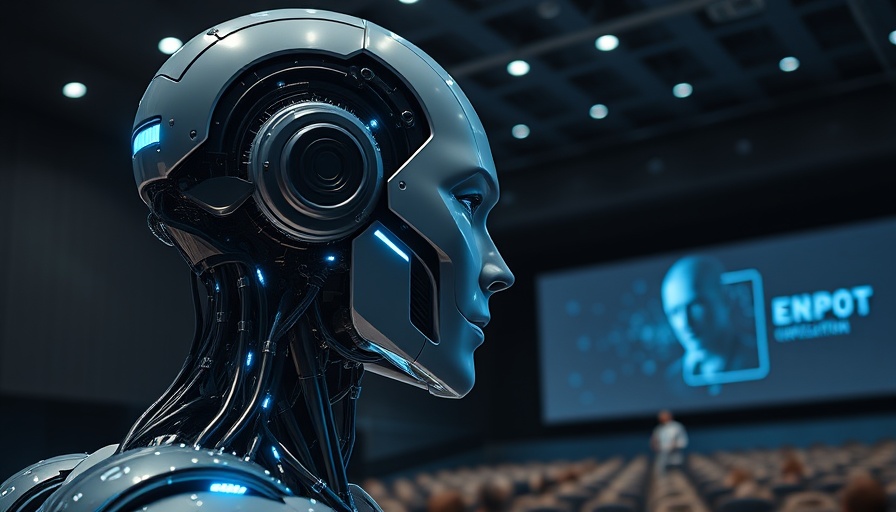
Google Gemini 2.5 Flash Image unveiling with futuristic robot.

Unlocking the Power of AI: Google’s Latest Innovation

Google has recently made waves in the tech world with the unveiling of its latest AI model, Gemini 2.5 Flash Image, informally nicknamed "NanoBanana." This advanced AI model promises a revolution in image generation and manipulation, leaving previous iterations in the dust. Here’s a closer look at what makes this technology a game-changer for businesses and creatives alike.

In 'Google Just Dropped an AI That Creates the Impossible,' the discussion dives into the groundbreaking capabilities of Gemini 2.5 Flash Image, exploring key insights that sparked deeper analysis on our end.

Understanding the Technology Behind NanoBanana

At its core, Gemini 2.5 Flash Image harnesses an impressive array of features that extend far beyond standard image generation. Compared to its predecessor, this new model maintains character consistency across different environments—a major leap forward for industries relying on storytelling and branding. Imagine a character seamlessly transported across various scenes without losing its identity; that's now a reality.

Merging Creativity With Practicality

One of the standout features of this AI is its semantic understanding. When users offer prompts to alter an image, it doesn’t merely redraw; it comprehends and executes changes based on context. For instance, it can transform a simple photo of a person into an entirely new setting, maintaining detail and lighting while making sophisticated alterations such as removing background elements or changing colors with stunning accuracy.

Efficiency at a Competitive Price

In addition to its cutting-edge features, Gemini 2.5 offers accessibility with competitive pricing—just $30 for one million output tokens, a significant reduction compared to competitors like OpenAI. For startups and tech professionals, this affordability is an attractive prospect, especially for those involved in Metro Detroit’s growing software development scene, as it allows experimentation without breaking the bank.

Applications for Michigan's Tech Ecosystem

For tech founders and investors in Michigan's innovation hubs, the implications of this AI model are vast. From generating high-quality marketing materials for Detroit tech startups to enhancing app development processes, the possibilities are endless. As the region embraces digital transformation, Gemini 2.5 could serve as the creative backbone for burgeoning businesses seeking to distinguish themselves in a competitive market.

Revolutionizing Storytelling and Visual Content Creation

Think about how effective storytelling drives engagement in today’s digital landscape. With tools like Gemini 2.5, professionals can create rich narratives enhanced with dynamic visuals rapidly. For instance, educators could leverage this technology to produce engaging teaching materials, or artists could explore new expressive forms through AI-generated art—further exemplifying Michigan's position as an emerging leader in technology and creativity.

The Road Ahead: What's Next for Google AI?

As speculation grows around what may follow the NanoBanana, insiders hint at even more advanced iterations, such as a Gemini 2.5 Pro model. If such developments emerge, it stands to reason that they will continue to shape the landscape of AI in creative industries, encouraging a reevaluation of tools and techniques currently employed by professionals.

Overall, Google’s Gemini 2.5 Flash Image signifies a substantial shift in how AI can facilitate creative workflows, enabling accessibility and efficiency in equal measure. As Michigan embraces these changes, it provides an excellent opportunity for tech professionals, especially within the Metro Detroit area, to integrate this innovation into their practices.

For those eager to experiment, Gemini 2.5 is available via Google AI Studio and through APIs—allowing anyone to explore its capabilities for free within certain limits. As we pave the way into the future of image generation, now is the time for those in the Michigan tech ecosystem to harness AI and revolutionize their creative processes.

Technology & Innovation

Write A Comment

*
*
Related Posts All Posts
01.05.2026

How OpenAI's GUMDROP AI Device Revolutionizes Access to AI in Michigan's Tech Scene

Update The Future of AI with OpenAI's GUMDROP Device OpenAI is disrupting the tech landscape with the development of its GUMDROP AI device, a game-changing innovation that redefines how we interact with artificial intelligence. Unlike traditional gadgets, GUMDROP is a screenless voice-first AI assistant designed to seamlessly integrate into your daily life, providing intuitive access to AI without apps or operating systems. As tech founders and professionals in Michigan’s robust tech ecosystem, understanding this device’s potential is crucial. In 'New OpenAI GUMDROP AI Device Turns ChatGPT Physical', the discussion dives into the implications of a screenless AI device, prompting deeper analysis on our end. Historical Context and Why GUMDROP Matters Historically, companies offering AI-driven tools mainly focused on model intelligence. However, OpenAI's pivot towards hardware development, backed by influential figures like Jony Ive and manufacturers like Foxconn, signifies a new trend where the focus shifts to controlling the interaction layer between users and AI. This shift reflects an understanding that when AI models become more accessible and interchangeable, the distribution of those models becomes critical. GUMDROP could potentially revolutionize how consumers access AI services, setting a competitive standard that tech startups in Michigan should monitor closely. Implications for the Metro Detroit Tech Scene The GUMDROP device's entrance into the market offers considerable implications for the thriving tech startup ecosystem in Metro Detroit. With a significant emphasis on innovation and digital transformation, local companies could harness GUMDROP’s technology to enhance their software development projects. Innovations around AI tools will likely lead to more effective solutions, especially pertinent for sectors like automation, data analytics, and cybersecurity—key focuses for many Metro Detroit tech firms. Real-World Application and Consumer Trust With real-world applications in homes and businesses, the GUMDROP device's ability to capture context and intent without interfacing through a screen opens up unique possibilities for consumer trust. As more individuals become comfortable interacting with a voice-first device, businesses can leverage this to create more personalized experiences. However, there’s a crucial challenge of earning trust. The device must address concerns about privacy and real-world adoption. As tech founders navigate these waters, incorporating user feedback into AI development will be essential for building trust in emerging technologies. Key Takeaways for Michigan Venture Funding As Michigan looks to bolster its venture funding landscape, innovations like the GUMDROP presents a strong case for attracting investment. With the AI field rapidly evolving, venture capitalists should consider startups that align their offerings with the technology trends propelled by such devices. This includes applications in digital transformation, as many Metro Detroit companies are focusing on AI technologies that enhance operational efficiencies. Understanding market demands driven by devices like GUMDROP could position local startups for growth in competitive funding rounds. Conclusion: The Next Phase of the AI Race The introduction of OpenAI's GUMDROP device signifies a bold move in the AI landscape, shifting the conversation from model intelligence to distribution advantages. For technology professionals and innovators in Metro Detroit, this represents not just an opportunity to adopt new technology, but to rethink how they develop, market, and integrate AI solutions across various industries. The implications for local startups and established tech firms alike are profound, marking a pivotal moment in the evolution of consumer technology. As we look to the future, it’s crucial that Michigan stays ahead of the curve by continually adapting to innovations such as GUMDROP, fostering a culture of growth and transformation within our tech ecosystem.

01.04.2026

Revolutionizing AI Reasoning: How Unlimited Context Windows Change the Game

Update AI's New Frontier: The Shift in Reasoning Models In a groundbreaking development, researchers have unveiled an innovative AI reasoning system that offers a significant advantage over traditional models. The new technique doesn't rely on feeding extensive inputs into a singular context window but instead allows the AI to navigate through information methodically. This method not only enhances performance but also addresses the persistent issue of context rot.In 'New AI Reasoning System Shocks Researchers: Unlimited Context Window', the discussion dives into the innovative approaches in AI reasoning, uncovering key insights that sparked deeper analysis on our end. Understanding Context Rot and Its Implications Context rot is a critical challenge in AI that occurs when long inputs compromise the model’s efficiency. As models scale with hefty data, their ability to retain relevant context deteriorates, leading to inaccuracies. The latest research introduces a Recursive Language Model (RLM) that treats inputs as an external environment rather than a linear sequence. By restructuring how reasoning occurs during inference, RLMs can access relevant information more effectively. This transformative approach is particularly relevant for Michigan's tech startups and professionals focusing on digital transformation. Revitalizing AI Performance: The Role of External Workspaces One of the standout features of this new reasoning system is its ability to 'outsource' components of its thinking to an external workspace. This not only mitigates performance issues linked to processing long inputs but also enables AI systems to handle millions of tokens at a lower cost. The potential everyday applications are immense, impacting sectors from software development to the burgeoning field of robotics across Metro Detroit. The Future of AI: Predictions and Emerging Trends As traditional AI models face limitations in scaling, the emergence of RLMs hints at a necessary evolution in these systems. Predictions suggest that subsequent AI models will be more exploratory, allowing them to function with greater flexibility and reliability. The implications for large codebases and research are profound, opening doors for progressive AI systems that can sift through massive amounts of information without incurring prohibitive costs. Collaborative Frameworks: Impact on Detroit's Tech Ecosystem In Michigan, the unfolding advancements in AI resonate strongly within the local tech landscape, particularly among startups and incubators striving for innovation. As Detroit asserts itself as an emerging hub for technological advances, this AI evolution could serve as a crucial springboard for venture funding and talent development. AI Innovations in the Context of Local Events Tech events and workshops across Metro Detroit are currently drawing attention to these advancements in AI technology. The community's response to these discussions suggests a growing interest in leveraging AI for solving real-world problems, paving the way for initiatives that integrate AI into areas such as cloud computing and cybersecurity. With the influx of interest around machine learning and data analytics, it’s crucial for stakeholders in Michigan’s tech landscape to stay informed and adapt to these shifts. Embracing the changes brought by recursive language models can enable companies to better prepare for future challenges and opportunities. Conclusion: Embracing Change in the Tech Ecosystem As the conversation around artificial intelligence deepens in Michigan’s innovation hubs, it's essential for tech founders, investors, and professionals to recognize the value of keeping pace with advancements like RLMs. The ongoing transformation of reasoning models not only enhances operational efficiency but also signifies a pivotal moment for the future of digital technologies. Engaging with these ideas can empower local professionals to become frontrunners in the AI landscape, ensuring Detroit becomes a benchmark for innovation.

01.03.2026

How DeepSeek's Manifold-Constrained Hyper-Connections Transform AI

Update DeepSeek Challenges Conventional AI Design Recently, DeepSeek has made waves in the world of artificial intelligence by challenging a decade-long assumption about the design and scaling of AI models. Traditionally, the focus has been on stacking more layers, increasing parameters, and amassing larger datasets. However, DeepSeek introduces a revolutionary approach with its Manifold-Constrained Hyper-Connections (mHC), which emphasizes enhancing the flow of information within a model rather than simply enlarging it.In 'DeepSeek Just CRUSHED Big Tech Again: MHC - Better Way To Do AI,' we explore the groundbreaking advancements in AI design brought forth by DeepSeek, prompting us to analyze their implications for the future of technology. Why Traditional AI Scaling Is Stumbling The landscape of AI development is rapidly changing. Traditional methods, which rely on increasing model size and complexity, are hitting a wall. As compute resources become more expensive and advanced chips harder to procure, simply making models larger yields diminishing returns. This is especially relevant for tech founders and professionals in Michigan, whose work revolves around innovation and digital transformation. For the local ecosystem, understanding these challenges is crucial to navigating the future of AI. How DeepSeek's mHC Works DeepSeek’s innovative mHC mechanism allows for greater stability and performance by altering how information flows within its AI architecture. Instead of following the conventional path of adding layers, mHC stabilizes multi-stream architectures using mathematical constraints. This fresh approach not only fosters enhanced reasoning capabilities across typical AI tasks, from general knowledge to mathematical problem-solving, but it also does so with minimal training overhead—around only 6–7% more than traditional methods. Benchmarks That Speak Volumes Real-world benchmarks indicate that DeepSeek is not just theorizing but executing. Their methods have demonstrated tangible gains in reasoning, math proficiency, and general knowledge tasks, showcasing the potential of mHC to change the narrative on AI functionality significantly. For organizations and startups poised to pivot in the tech space, these insights could be invaluable for informing strategic decisions regarding investments in AI technology. Exploring the Future of AI With mHC As the industry moves beyond larger models and more data, the implications of mHC are far-reaching. This new scaling method suggests a paradigm shift that tech startups in Metro Detroit should consider for future ventures in Michigan’s thriving innovation hubs. The ability to stabilize complex models while maximizing performance may well pave the way for new applications in blockchain technology, data analytics, and even robotics. Bridging Gaps in the Tech Landscape The introduction of mHC fosters an exciting dialogue around traditional AI methods and the opportunities arising from innovative approaches. For investors in Michigan’s venture funding landscape, backing entities like DeepSeek may lead to fruitful returns as they adopt new technologies. With local tech events continuously bringing attention to emerging trends, this is a prime time to engage in discussions on how such frameworks can be integrated within existing structures. Local Opportunities for AI Growth For tech professionals engaged in software development or app evolution in Metro Detroit, DeepSeek’s advancements signal a compelling opportunity to rethink deployment strategies. Enterprises should explore ways to integrate mHC functionalities into their existing frameworks, thereby enhancing their innovative edge within competitive markets. Additionally, Michigan coding bootcamps and incubators should incorporate this knowledge into their curricula, preparing the next generation of tech talent for advanced AI concepts. Call to Action: Embrace the Future of AI As a tech founder or investor in Metro Detroit, this is an opportunity to not just observe but act. Engaging with the principles behind DeepSeek's mHC can provide a competitive advantage in the fast-evolving AI landscape. Don’t wait; explore how you can incorporate these insights into your next project for substantial impact.

Image Gallery Grid

Terms of Service

Privacy Policy

Core Modal Title

Sorry, no results found

You Might Find These Articles Interesting

T
Please Check Your Email
We Will Be Following Up Shortly
*
*
*